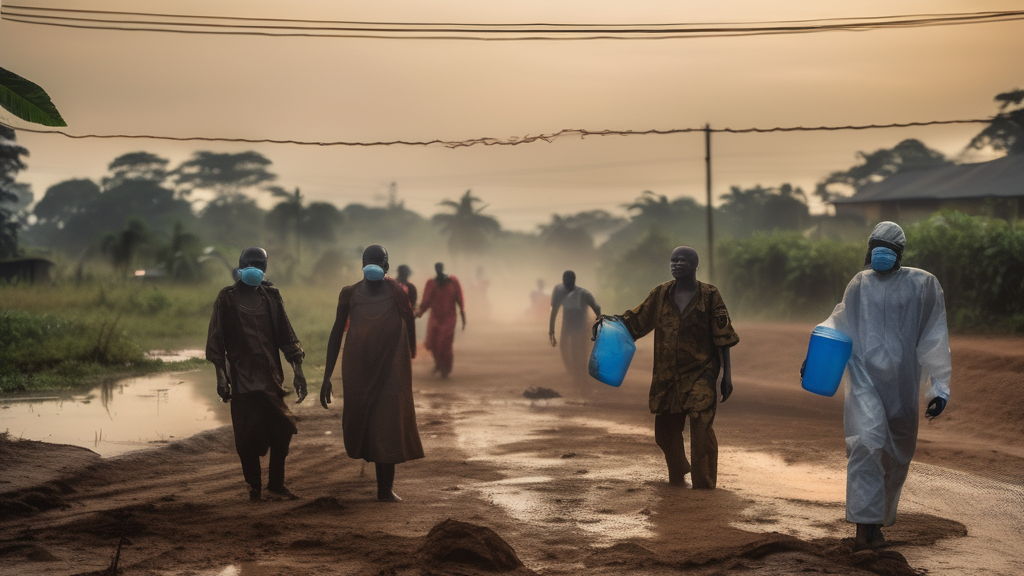
More than a thousand people have now died in the Democratic Republic of the Congo’s latest Ebola outbreak, a grim milestone that health officials had desperately hoped to avoid.
The World Health Organization confirmed the toll earlier this week, with the outbreak centred primarily in the country’s North Kivu and South Kivu provinces. Cases have been recorded across dozens of health zones, and the virus has shown a particularly cruel tendency to strike healthcare workers on the front lines.
This is not the DRC’s first encounter with Ebola. The country has battled the disease more times than any other nation on earth, but sheer familiarity hasn’t made containment any easier. Ongoing conflict in the eastern provinces continues to hamper response efforts, with aid workers frequently unable to reach affected communities safely.
A senior WHO official noted that “insecurity and population displacement” remain the two biggest obstacles to breaking transmission chains, describing the situation as one of the most operationally complex outbreaks the organisation has ever faced.
The 1,000-death threshold lands particularly hard when you consider that an effective Ebola vaccine, rVSV-ZEBOV, has existed since 2019. Vaccination campaigns are underway, but reaching isolated or conflict-affected villages is far easier said than done. Vaccine hesitancy, fuelled in part by misinformation spread through local communities, has also slowed uptake in some areas.
Neighbouring countries, including Uganda and Rwanda, have stepped up border surveillance in recent weeks. There have been a small number of confirmed cases crossing provincial lines, which keeps regional health authorities very much on edge.
Funding, as ever, is a pressure point. International donors have pledged support, but disbursements tend to lag behind need, and the DRC’s health system was already stretched thin before this outbreak began.
The human cost behind that four-digit figure is staggering. Each number represents a family fractured, a community disrupted, a healthcare worker who didn’t come home. With the rainy season approaching and movement between villages increasing, the question isn’t just whether the outbreak can be contained. It’s how quickly the world is willing to act before the count climbs higher still.