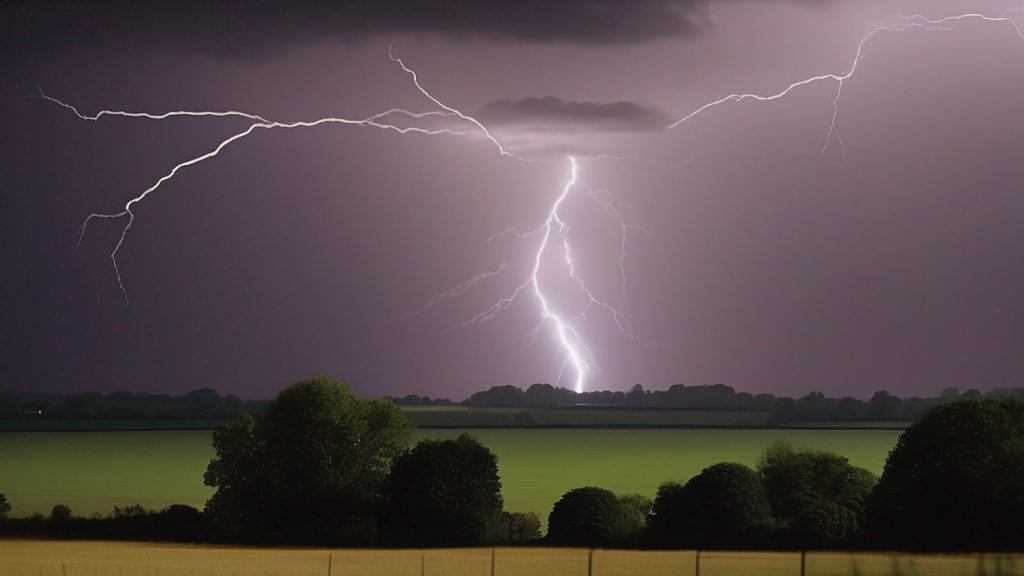
If you were planning a barbecue this weekend, you might want to have a backup plan. The Met Office has issued a yellow weather warning covering large parts of the UK, with forecasters flagging the risk of lightning strikes, torrential downpours, and what some meteorologists are describing as “tornado-like” conditions in the most affected areas.
The warning, which covers a significant stretch of central and southern England, is in place for a period when temperatures have been building steadily. That combination of heat and atmospheric instability is precisely what fuels the kind of violent, fast-moving storms that can catch people off guard on what looks like a perfectly decent afternoon.
The Met Office has warned that some locations could see 30 to 40 millimetres of rain falling within just a couple of hours, with hail also possible. That’s the kind of intensity that drains quickly turn into rivers and underpasses into swimming pools.
“The public should be aware that these storms can develop rapidly and move quickly,” the Met Office noted in its advisory, adding that travel disruption and localised flooding are both realistic possibilities.
The tornado reference, while alarming-sounding, refers to brief, weak funnel clouds that can form during intense convective storms. They’re far less dramatic than their American counterparts, but they’re not nothing either. Damage to trees, fences, and outbuildings has been recorded during similar events in previous summers.
It’s worth keeping an eye on apps and local alerts throughout the day, since these storms don’t tend to give much notice. The Met Office recommends avoiding open ground, tall trees, and water during lightning activity, all sensible advice that most of us quietly ignore until a crack of thunder is already rattling the windows.
Ironically, the same weather pattern bringing all this chaos is also responsible for the warm, muggy conditions many parts of England have been enjoying. The storm is essentially the price of the heat.
Whether this turns into a brief dramatic downpour or something more disruptive depends heavily on exactly where the cells develop. Britain’s relationship with summer weather has always been a gamble; this week, it seems the odds are particularly interesting.