For the first time in over a decade, the world’s fastest supercomputer isn’t American. China has quietly reclaimed the top spot on the global computing leaderboard, and the implications stretch well beyond a nerdy league table.
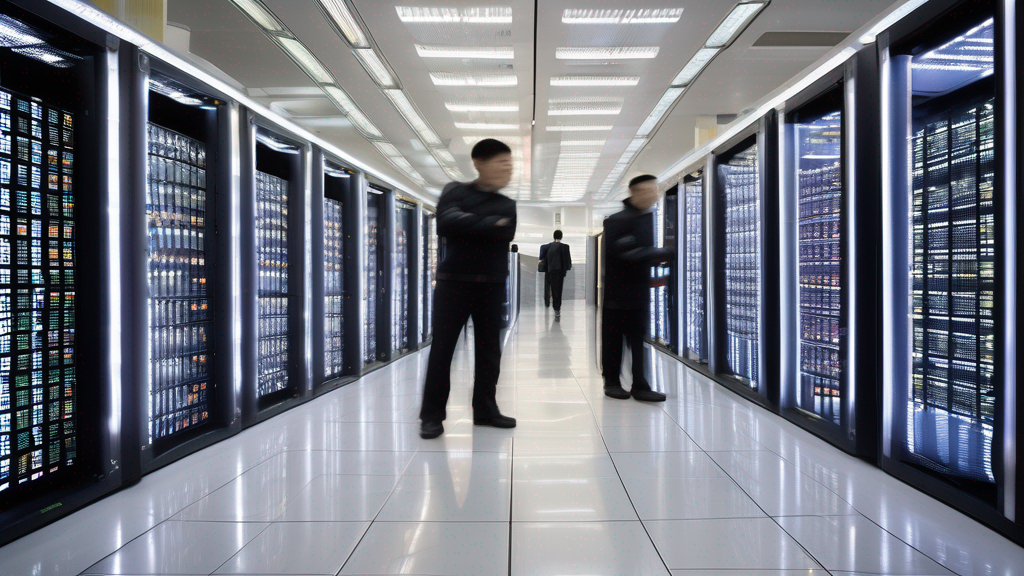
The machine in question is Tianhe-3, developed by China’s National University of Defense Technology. It’s clocked at a staggering 1.5 exaflops, meaning it can perform 1.5 quintillion calculations per second. To put that in some kind of human terms: it would take every person on Earth doing one calculation per second roughly 190,000 years to match what Tianhe-3 does in a single second.
It comfortably knocks America’s Frontier system, based at Oak Ridge National Laboratory in Tennessee, off the number one perch. Frontier had held the title since 2022, and US officials had grown rather comfortable with that particular bragging right.
Professor Jack Dongarra, who co-founded the TOP500 list that tracks these rankings, described the achievement as “a significant leap” and noted that China’s investment in domestic chip architecture had clearly paid off. This matters because Tianhe-3 reportedly runs largely on Chinese-designed processors, a pointed response to US export restrictions that have tried to limit Beijing’s access to advanced semiconductors.
The timing is hardly coincidental. Washington has spent the past two years tightening controls on chip exports to China, betting that throttling access to cutting-edge hardware would slow its rival’s progress. Tianhe-3 suggests that strategy may have had the opposite effect, pushing China to accelerate its own silicon development rather than remain dependent on American or Dutch suppliers.
Supercomputers aren’t just about national pride, of course. They underpin everything from climate modelling and drug discovery to nuclear weapons simulation and artificial intelligence research. Whoever runs the fastest machines tends to run the most ambitious science.
For Western governments, the question now is whether this is a one-off milestone or the start of a sustained shift in the balance of computational power. Given China’s stated ambitions in AI and quantum computing, it’s probably worth taking seriously.